In this article, we will delve into the intricate workings of commercial security systems, exploring the technologies and methodologies that keep businesses safe. We aim to answer some of the most frequently asked questions on this crucial topic. With the increasing complexity of threats, understanding how these systems operate is more essential than ever.
What are the Components of a Commercial Security System?
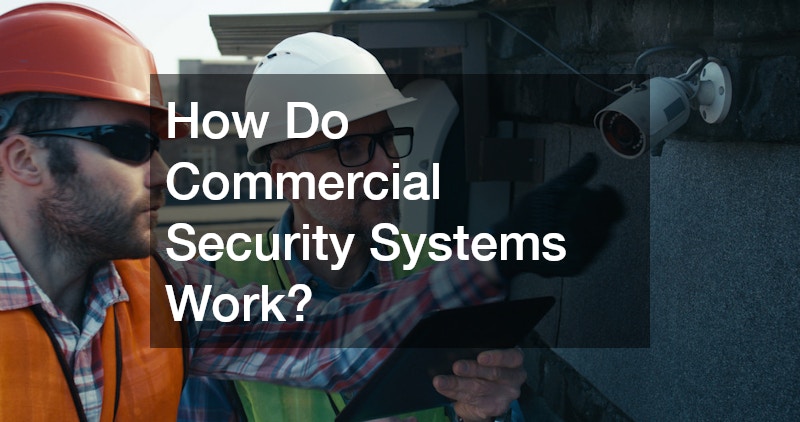
Video surveillance is a cornerstone of commercial security systems, employing a range of cameras to monitor premises continuously. High-definition cameras placed at strategic points capture and record video footage, providing a constant watch over sensitive locations. These systems can detect unusual activity, trigger alerts, and provide valuable evidence in case of incidents.
Modern video surveillance often involves remote viewing capabilities, allowing security personnel to monitor multiple sites from a centralized location. By integrating real-time analytics, video surveillance systems can automatically identify potential threats, such as unauthorized entries or loitering. This technology is indispensable for large corporations, where continual oversight is necessary to ensure safety and security.
Access Control Systems
Access control systems regulate who can enter or exit a building, safeguarding sensitive areas from unauthorized access. Through the use of keycards, biometric scans, or pin codes, these systems authenticate identities before granting entry. They play a vital role in tracking employee movements and maintaining stringent records of all entries and exits.
Effective access control systems offer flexibility, allowing permissions to be customized for individual roles or departments. For example, a manager might have broader access rights than a regular employee. Such systems often integrate with other security layers, ensuring that once someone enters the premises, their movements are continuously monitored.
Intrusion Detection
Intrusion detection systems are designed to alert security personnel to unauthorized access attempts. These systems encompass a network of sensors and alarms strategically placed throughout a facility. When triggered, they dispatch alerts to both on-site security and, if needed, local law enforcement agencies.
The sensors used in intrusion detection systems are highly sensitive, capable of detecting even subtle movements or changes in the environment. They include door/window sensors, motion detectors, and glass break sensors. By offering real-time detection capabilities, these systems minimize response times, reducing potential damage or injury.
How Does a Commercial Security System Operate?
Continuous monitoring is at the heart of effective commercial security systems, ensuring constant vigilance against potential threats. Security companies and in-house teams deploy a variety of tools and technologies to oversee activities around the clock. The aim is to identify and respond to incidents with precision and speed.
Central monitoring stations play a pivotal role, staffed by trained personnel who assess real-time data from video feeds and sensors. These professionals can quickly escalate situations requiring immediate intervention, dispatching emergency services as needed. This centralized approach enhances coordination and communication in crisis scenarios.
Alarm Response
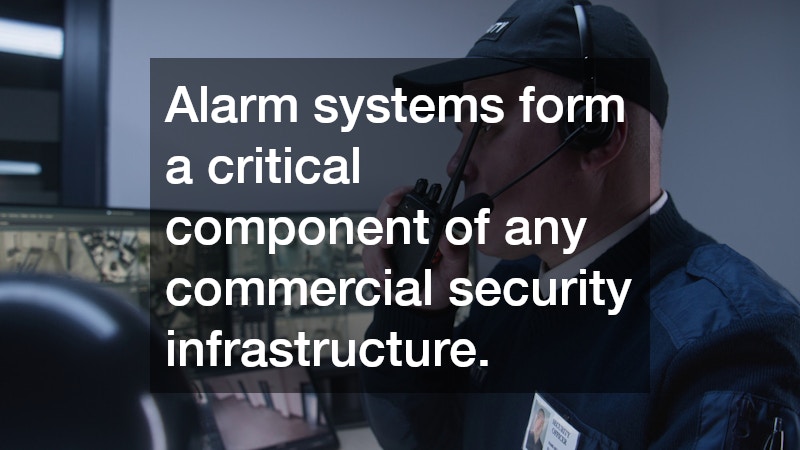
Alarm systems form a critical component of any commercial security infrastructure, offering immediate notifications to designated personnel. When an alarm is triggered, predetermined protocols are activated to address the potential security breach. Rapid response is facilitated through seamless communication between security teams and law enforcement agencies.
The effectiveness of an alarm response lies in its strategic design and implementation. Security plans often involve multiple layers of response, ensuring that the first line of defense can handle minor incidents internally. In contrast, more serious threats trigger external support from police and emergency services.
System Integration
System integration is a key element in achieving a cohesive commercial security strategy, combining various security features into a unified framework. This integration allows separate components, like video surveillance and access control, to work in unison. Such synergy enhances the overall security posture of a business.
Due to technological advancements, modern security systems are highly integrative, with solutions that communicate over shared networks. Many businesses leverage this connectivity to streamline their operations, reduce redundancies, and provide a holistic view of their security landscape. Integration simplifies management, as operators can control all systems from a single interface.
What are the Latest Technologies in Commercial Security Systems?
Artificial Intelligence (AI) and Machine Learning (ML) are at the forefront of revolutionizing commercial security systems. These technologies enable automated threat detection and predictive insights, vastly improving decision-making processes. With AI’s ability to process vast datasets, security systems can now accurately identify patterns associated with potential security breaches.
Machine learning algorithms enhance the adaptability of security systems by learning from past data and adjusting to new threats. They improve system accuracy, reducing false positives and ensuring genuine threats receive the attention needed. As the landscape of threats continues to evolve, ML ensures systems can adapt swiftly while maintaining vigilance.
IoT and Cybersecurity
The Internet of Things (IoT) is transforming the security landscape by connecting an array of devices into intelligent ecosystems. IoT-enabled security systems provide real-time data, which enhances situational awareness and decision-making. However, with the integration of more connected devices comes an elevated risk of cybersecurity threats.
Cybersecurity measures are integral in safeguarding IoT systems against potential breaches and data theft. Businesses must adopt robust protocols to ensure that their IoT networks are secured from unauthorized access and cyber attacks. Failing to secure these devices can expose organizations to dire consequences, impacting both reputation and operational continuity.
Commercial security systems are indispensable for safe and secure business operations. The multifaceted approach combining surveillance, access control, and intrusion detection forms a robust defense against potential threats. Continual innovation will undoubtedly drive further advancements, enhancing the security capabilities available to businesses worldwide.