Winter weather presents more than a seasonal inconvenience for businesses. Snow and ice accumulation can disrupt operations, create safety hazards, and damage a company’s reputation if not managed effectively. For commercial properties, parking lots, walkways, entrances, and loading areas must remain safe and accessible regardless of weather conditions.
A proactive snow management strategy—often supported by a reliable commercial snow removal service—is essential for minimizing risk and maintaining continuity. This article explores how snow removal affects safety, finances, and day-to-day operations, and why it should be treated as a core operational priority rather than an afterthought.
How Does Snow Removal Affect Business Safety?
Safety is the most immediate and visible impact of effective snow removal. Businesses have both a moral and legal responsibility to maintain reasonably safe premises for customers, employees, and vendors.
Snow-covered walkways and icy parking lots significantly increase the risk of slip-and-fall accidents. These incidents can result in serious injuries, insurance claims, and costly litigation. Even minor injuries can trigger liability issues if a property owner is found negligent in maintaining safe conditions. Engaging a commercial snow removal service ensures that high-traffic areas are cleared promptly and treated with appropriate de-icing materials. Timely plowing, salting, and monitoring reduce the likelihood of hazardous surfaces forming. Beyond risk mitigation, visibly maintained grounds signal professionalism and care—an important factor in customer perception.
Employees face the same risks as customers, particularly during early morning or late evening shifts when snow and ice are more likely to accumulate. Unsafe conditions can lead to workplace injuries, workers’ compensation claims, and lost productivity. Maintaining clear access points, loading docks, and staff parking areas demonstrates a commitment to employee safety. It also reduces absenteeism caused by injuries or delayed commutes. A structured snow removal plan ensures that safety measures are implemented consistently, not reactively.
Many municipalities impose legal requirements on property owners to remove snow and ice within a specified timeframe after a snowfall. Failure to comply can result in fines, citations, or increased liability exposure in the event of an accident. Partnering with a professional commercial snow removal service helps businesses meet local compliance standards. Documented service logs and maintenance records can serve as evidence of due diligence if disputes arise. In regulated industries or high-traffic environments, compliance is not optional—it is a critical component of risk management.
What Are the Financial Implications of Snow Removal?
Snow removal is often viewed as a seasonal expense, but the financial implications extend well beyond the service invoice. When managed strategically, it can protect revenue and reduce long-term costs.
Hiring a professional provider involves costs that vary based on property size, service frequency, and contract structure. Pricing models may include per-visit charges, seasonal contracts, or retainer-based agreements. While the upfront expense may seem significant, it should be evaluated against potential liability costs, lost revenue, and property damage associated with inadequate snow management. Professional services bring specialized equipment, trained crews, and weather monitoring systems that deliver more efficient and thorough results than ad hoc in-house efforts.
Accessibility directly influences revenue during winter months. If customers cannot safely enter a property or park their vehicles, they may choose a competitor instead. Retail stores, medical offices, restaurants, and service-based businesses are particularly vulnerable to weather-related traffic declines. A well-maintained exterior reassures customers that the business is operational and attentive. Prompt snow removal supports uninterrupted operations, even during heavy snowfall. In many cases, businesses that remain accessible during adverse weather capture additional market share when competitors fail to maintain clear premises.
Consistent snow management reduces the risk of costly infrastructure damage. Ice accumulation can degrade asphalt, crack concrete, and stress roofing systems. Repeated freeze-thaw cycles exacerbate these issues when snow is not properly cleared. Preventative snow removal helps preserve parking lots, walkways, and structural elements, extending their service life. Over time, this reduces capital expenditures for repairs and resurfacing. When viewed through a lifecycle cost perspective, professional snow management often proves financially prudent.
Why Is Regular Snow Removal Essential for Business Operations?
Operational continuity depends on more than interior efficiency. Exterior conditions play a significant role in determining whether a business can function smoothly during winter.
Snow accumulation can obstruct delivery routes, block loading docks, and delay service vehicles. For logistics-dependent businesses, even minor delays can cascade into missed deadlines and dissatisfied clients. Routine monitoring and timely plowing ensure that critical access points remain functional. A structured snow response plan—often coordinated through a commercial snow removal service—allows businesses to anticipate weather events and act before disruptions escalate. This proactive approach supports operational resilience.
First impressions matter, especially during challenging weather conditions. A cleared parking lot and shoveled entrance create a welcoming environment that reduces stress for visitors. Customers are more likely to return to businesses that prioritize convenience and safety. Snow-covered entrances, by contrast, communicate neglect and create frustration. Regular snow removal contributes directly to positive customer experiences and reinforces brand credibility.
Snow and ice can cause more than surface-level inconvenience. Heavy snow loads may strain roofs, while improper drainage from melting snow can lead to water intrusion and foundation damage. Strategic snow removal minimizes these risks by managing accumulation and directing runoff appropriately. Clearing snow away from building perimeters and maintaining drainage pathways protects structural integrity. Over time, this preventive approach reduces the likelihood of emergency repairs and business interruptions.
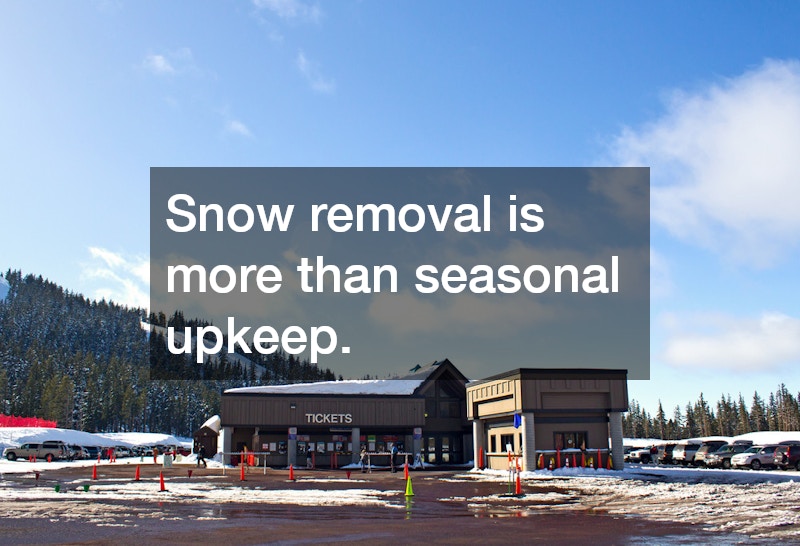
Snow removal is more than seasonal upkeep—it’s essential to risk management and operational stability. Proper snow management improves safety, ensures compliance, and protects winter revenue. Investing in professional services helps prevent liability claims, property damage, and lost sales while maintaining accessibility and efficiency. Partnering with a reliable commercial snow removal service allows businesses to protect their reputation, assets, and day-to-day operations all season long.